Why You Feel Terrible After the Healthiest Trip of Your Life

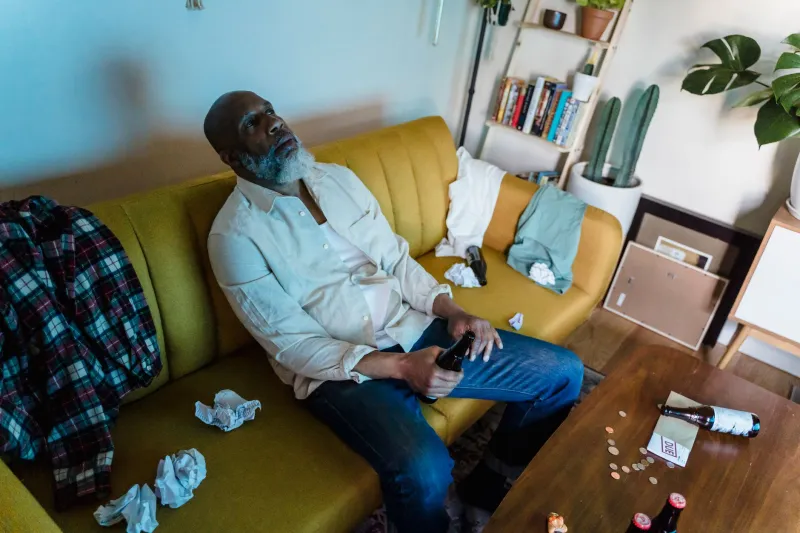
You spent a week waking up at 6 a.m. for sunrise yoga. You ate farm-to-table meals, drank your body weight in herbal tea, and actually slept eight hours a night. You came home glowing — and then, somewhere around day two back in your real life, everything fell apart.
The green smoothies felt like too much effort. The meditation app felt hollow. Work stress hit harder than usual, and you found yourself stress-eating the exact foods you'd sworn off at the retreat. Sound familiar?
This isn't a personal failure. It's something wellness professionals sometimes call the post-retreat crash — and it's a lot more common than the glossy Instagram posts from your fellow retreat-goers would suggest.
The Gap Between the Bubble and the Real World
Wellness retreats and health-focused vacations are, by design, total environments. Everything is optimized for your wellbeing: the food, the schedule, the social dynamics, the absence of your inbox. That's genuinely powerful — but it's also artificial.
When you're in that bubble, your nervous system downshifts. Cortisol drops. Sleep improves. You feel calmer, more present, more like the person you want to be. The problem is that your brain starts associating that environment with those feelings, not the habits themselves.
So when you come home to a messy apartment, a pile of bills, and a boss who didn't pause their demands while you were detoxing — the contrast hits like a wall. Your nervous system, which just spent a week in low-stress mode, is now getting hit with the full force of your normal life. That whiplash is both psychological and physiological.
What's Actually Happening in Your Body
From a purely physical standpoint, intensive wellness experiences can temporarily alter your baselines in ways that make reentry harder.
If your retreat involved significantly more movement than your regular life, your body may be dealing with residual muscle fatigue or a mild energy deficit once you stop. If the food was dramatically cleaner than your usual diet, your gut microbiome may have shifted in ways that make ordinary meals feel heavier or harder to digest.
And then there's sleep. Many retreat environments are quieter, darker, and less digitally stimulating than home. Getting back to city noise, blue light, and a phone buzzing on your nightstand can disrupt the sleep quality you just spent a week rebuilding.
None of this means the retreat was bad for you. It just means your body got used to something better — and is now loudly asking for it back.
The Guilt Layer Makes It Worse
Here's where the mental health piece kicks in. A lot of people don't just feel physically off after a wellness trip — they feel guilty about not being able to maintain what they experienced. And guilt is one of the most counterproductive emotions in any health journey.
You start telling yourself a story: I had the tools, I knew what to do, and I still couldn't keep it going. That narrative is both unfair and inaccurate. Maintaining retreat-level wellness in everyday American life — with a commute, a job, a family, a budget, and no personal chef — is not a realistic benchmark. Comparing your Tuesday morning to your Thursday at a mountain spa is setting yourself up to fail.
The crash isn't a sign that the experience didn't work. It's a sign that the gap between your retreat life and your real life is wider than you'd like. That's useful information — not a verdict on your character.
How to Bridge the Gap Instead of Falling Through It
The goal isn't to replicate your retreat at home. That's not sustainable, and chasing it will exhaust you. Instead, the goal is to extract one or two genuinely transferable insights and build a bridge between what you experienced and what's actually doable.
Before you leave the retreat (or on your last day of the trip), write down three specific things that made you feel best. Not abstract concepts like "mindfulness" — concrete things, like "I felt amazing when I ate breakfast before checking my phone" or "the 20-minute walk after dinner was the best part of every day."
Those specifics are your anchors. They're the things worth fighting to protect when you get home.
Give yourself a transition day if at all possible. Flying home Sunday night and going straight into a Monday morning grind is a setup for a hard crash. If you can, build in a buffer day — even a quiet Sunday at home before the week starts — to let your nervous system adjust.
Expect the contrast, and name it. When you walk back into your regular environment and feel the weight of it, don't catastrophize. Just notice it. Oh, this is the contrast. This is normal. That small act of naming it keeps you from spiraling into the guilt loop.
Lower the bar for week one. You don't need to come back from a wellness retreat and immediately overhaul your entire routine. Pick one habit — just one — that you want to carry forward, and focus on that for the first two weeks. Let everything else be whatever it is.
Rethinking What a Wellness Vacation Is Actually For
Maybe the bigger mindset shift here is about what we expect from these experiences in the first place. A health-focused trip isn't a download that permanently upgrades your operating system. It's more like a reset — a chance to feel what's possible, to rest in a way that everyday life doesn't always allow, and to come back with a little more clarity about what you actually want your wellness to look like.
If you return feeling temporarily worse, that's not a broken outcome. That's the process. The retreat showed you the ceiling. Now the real work is building a floor that's a little higher than it was before you left.
At AreKore365, we talk a lot about sustainable wellness — the kind that works on a random Tuesday in February, not just at a beachside spa in October. The insight you bring home from a wellness trip is only as valuable as your ability to weave it into an ordinary week. And that's a skill worth developing, one small habit at a time.
So go ahead and book the retreat. Enjoy every sunrise stretch and grain bowl. Just pack your expectations lightly — and give yourself some grace when real life comes back into view.