Too Much Wellness Advice Is Actually Making You Unwell
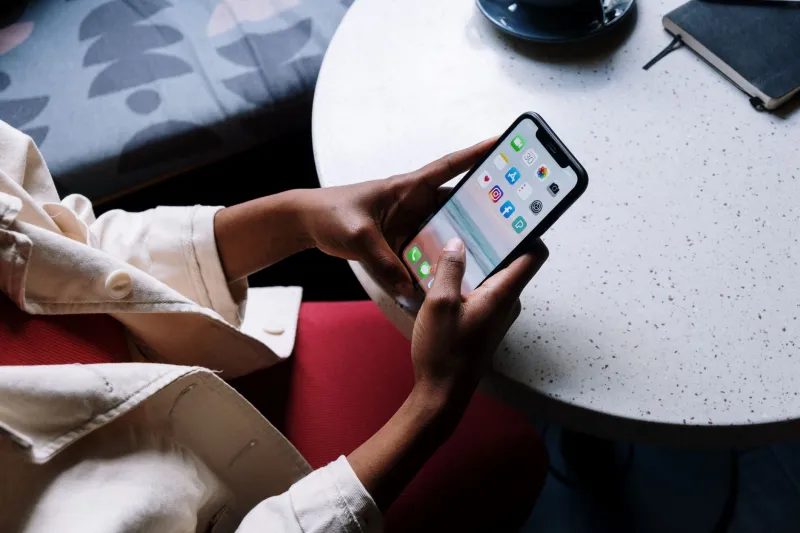
Here's a scenario that probably sounds familiar. You wake up, scroll through your phone for five minutes, and by the time you put it down you've been told that coffee is a superfood, coffee is destroying your gut, you need 10,000 steps a day, 10,000 steps is an arbitrary myth, and that the one thing you've been doing to sleep better is actually wrecking your circadian rhythm.
Congratulations. It's 7:14 a.m. and you're already exhausted.
This is the strange paradox of modern wellness culture in America: we have more health information at our fingertips than any generation in history, and we are somehow more confused, more anxious, and more fatigued by the whole thing than ever before. More data, less clarity. More advice, less confidence. More wellness content, more stress.
That's not a coincidence.
The Information Explosion Nobody Asked For
There are roughly 100,000 health and fitness apps available in the US App Store. American adults consume an average of over seven hours of media per day, and a significant chunk of that is wellness content—TikTok nutritionists, Instagram fitness coaches, podcast doctors, and the endless churn of studies that get translated into headlines like "Scientists Say Everything You Know About Eating Is Wrong."
The problem isn't that this information is useless. Some of it is genuinely helpful. The problem is volume and contradiction. When credible-sounding sources disagree on almost everything—from whether you should eat before a workout to whether stretching is good or bad for you—your brain doesn't get smarter. It gets stuck.
Psychologists call this decision fatigue and analysis paralysis, and they're not just abstract concepts. When you can't make a confident choice about something as basic as what to eat for lunch, that uncertainty generates a low-grade stress response. Do that dozens of times a day across food, sleep, exercise, supplements, and mental health habits, and you're running a cortisol drip that never fully shuts off.
That chronic background stress? It's genuinely bad for your health. Which means the pursuit of wellness is, for many people, actively making them less well.
Why Contradictory Health News Hits So Hard
It's worth understanding why conflicting health advice feels so destabilizing. When you're navigating something like your finances or your career, you expect competing opinions. But health feels different—it's personal, it's urgent, and for a lot of us it carries a moral weight. Eating "right" or "wrong" doesn't just feel like a practical decision. It feels like a statement about how much we care about ourselves.
So when a study reverses conventional wisdom on something you've been doing for years, it doesn't just update your knowledge. It threatens your identity as someone who takes care of themselves. That's a much bigger psychological hit than it might seem.
Social media amplifies this effect. Algorithms don't reward nuance—they reward engagement. And nothing drives engagement like contradiction and urgency. "Everything you know about protein is a lie" gets more clicks than "most people do pretty well with moderate protein intake." So the content that reaches you most reliably is often the most alarmist, the most extreme, and the most likely to make you second-guess what you were doing just fine yesterday.
The Quiet Cost of Wellness Overwhelm
Decision fatigue around health doesn't just leave you paralyzed. It often pushes people toward one of two equally unhelpful extremes.
The first is obsessive optimization—constantly chasing the newest protocol, swapping out habits every few weeks based on whatever just went viral, never giving any single approach long enough to actually work. This is exhausting, expensive, and usually ineffective because consistency is almost always more important than perfection.
The second extreme is complete shutdown. You get so overwhelmed by conflicting signals that you disengage entirely. You stop trying, not because you don't care, but because caring has become too cognitively and emotionally costly. This is sometimes called "wellness fatigue," and it's more common than most people admit.
Both responses make total sense. Neither one actually helps you feel better.
A Framework for Filtering the Noise
So what do you actually do with all of this? The goal isn't to stop paying attention to health information—it's to build a filter that lets you engage with it without being destabilized by it. Here's a practical framework to start with.
Anchor to consensus, not headlines. Single studies are almost never the final word on anything. What matters is whether a finding has been replicated across multiple large, independent studies over time. If something has been showing up consistently in nutrition or fitness research for decades—eat more vegetables, move your body regularly, prioritize sleep, manage stress—it's probably worth your attention. If it showed up in one study this week, you can safely file it under "interesting if confirmed" and move on.
Consider the source's incentive. An influencer selling supplements has a different relationship to health information than a registered dietitian who works in a hospital. That doesn't mean the influencer is always wrong, but it's worth asking: what does this person gain if I change my behavior based on what they're telling me? Incentive doesn't determine truth, but it's a useful filter.
Build your personal baseline first. Before you optimize anything, get clear on the basics: Are you sleeping? Are you moving? Are you eating food that gives you sustained energy most of the time? Are you managing stress in some way? If those four things are more or less in place, you have a solid foundation. Most of the advice you're drowning in is about optimizing past that baseline—and optimization without a foundation is just noise.
Create a "trusted sources" short list. Pick two or three health professionals or evidence-based outlets you genuinely trust—maybe a doctor you respect, a registered dietitian, and one science-based publication—and give yourself permission to mostly ignore everything else. This isn't about becoming uninformed. It's about protecting your attention from being hijacked by every new claim that crosses your feed.
Give your body time to give you feedback. One of the most underrated health tools you have is your own experience. If you've been doing something consistently for six to eight weeks and you feel better, that matters. If you feel worse, that matters too. Your lived experience isn't the only data point, but it's one of the most relevant ones—and it's one that no study, app, or influencer can replicate.
You Don't Have to Know Everything to Be Healthy
Here's the thing that gets lost in all the noise: being healthy in a sustainable, real-world way doesn't require you to have perfect information. It requires you to have enough information, applied consistently, over time.
The people who tend to do best with their health long-term aren't the ones who've read the most studies. They're the ones who've found a handful of habits that work for their actual life and stuck with them—even when some new headline told them they were doing it wrong.
At AreKore365, we think about wellness as something you build day by day, not something you crack with the right formula. And part of building it sustainably is learning to protect your mental energy from the firehose of information that's competing for it.
You're allowed to know less and feel better. In fact, for a lot of people, that's exactly the prescription.