Sleeping Against the Clock: A Night Shift Worker's Guide to Protecting Your Health

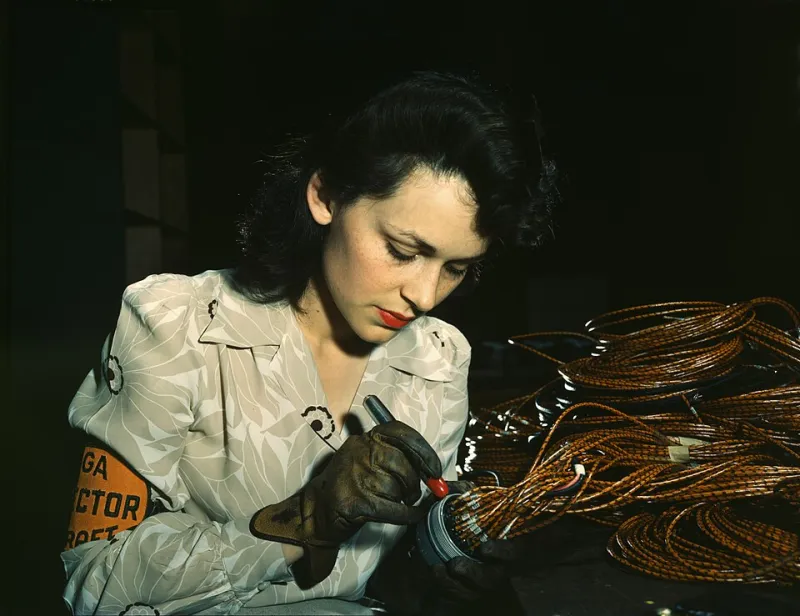
Photo: Marjory Collins, Public domain, via Wikimedia Commons
Most wellness content assumes you wake up with the sun, hit the gym before work, meal prep on Sunday afternoon, and wind down by 10 p.m. with a chamomile tea. If you're a nurse, a factory worker, a trucker, a security guard, or any of the roughly 15 million Americans who clock in when most people are clocking out — that advice might as well be written in a foreign language.
Working nights isn't just inconvenient. It actively works against your body's built-in biological programming. But that doesn't mean your health has to suffer. It means you need a different playbook. Welcome to yours.
Understanding What Your Body Is Actually Fighting
Your circadian rhythm is your internal 24-hour clock, and it's deeply wired to follow light and darkness cues. When you're awake at 3 a.m. and asleep at noon, your body gets confused signals — your hormones, digestion, metabolism, and immune function all run on that internal schedule, and disrupting it consistently has real consequences.
Research has linked chronic shift work to elevated risks of cardiovascular issues, metabolic syndrome, mood disorders, and impaired cognitive function. That sounds scary, and it's worth taking seriously — but it's also manageable. The key is working with your biology as much as possible, rather than ignoring it entirely.
Sleep Strategy: Quality Over Conventional Timing
You might not be able to sleep at the "right" time, but you can absolutely optimize the sleep you do get. Here's what actually moves the needle:
Blackout your sleep space completely. Daylight is your biggest enemy when you're trying to sleep at 8 a.m. Blackout curtains are a non-negotiable investment. A sleep mask works as a backup. Your brain needs darkness to produce melatonin, full stop.
Protect your sleep window like it's a meeting. Night shift workers often sacrifice sleep for social obligations or household tasks. Communicate clearly with family or roommates about your sleep hours. Put your phone on Do Not Disturb. Treat your sleep block with the same respect you'd give a work shift.
Create a pre-sleep wind-down ritual. Whether you're getting home at 7 a.m. or 3 p.m., give yourself 30–45 minutes to decompress before lying down. Dim the lights, avoid screens, try light stretching or a warm shower. Your nervous system needs a signal that it's time to shift gears.
Be strategic with melatonin. Low-dose melatonin (0.5–1 mg) taken about 30 minutes before your intended sleep time can help nudge your body in the right direction. It's not a sleeping pill — it's a timing signal. Talk to your doctor before making it a regular habit.
Anchor your sleep time when possible. If your schedule allows, try to keep your sleep window at the same time even on your days off. Completely flipping back to a "normal" schedule every weekend is one of the most disruptive things shift workers do to themselves.
Meal Timing: Eating for Your Actual Schedule
Conventional nutrition advice says eat breakfast in the morning, don't eat late at night. For night shift workers, that framework needs a full rewrite.
Your digestive system follows your circadian rhythm too, which means it's less efficient at processing food during what your body perceives as nighttime hours (roughly 12 a.m.–6 a.m. biologically, regardless of your schedule). The practical implication: try to eat your larger, more complex meals during your personal "daytime" — the hours you're most awake and active — and keep food lighter during the biological overnight window.
Before your shift: Eat a solid, balanced meal — protein, complex carbs, healthy fats. This is your version of "breakfast." Don't skip it.
During your shift: Keep snacks light and strategic. Think Greek yogurt, a handful of nuts, fruit, or a small wrap. Avoid heavy, greasy foods in the middle of the night — they'll tank your energy and make that 4 a.m. slump even worse.
After your shift: Have something small and easy to digest before you sleep. You don't want to go to bed starving, but a heavy meal right before sleep disrupts rest quality.
Caffeine cutoff: This one is critical. Set a hard stop on caffeine at least 6 hours before your planned sleep time. If you're sleeping at 9 a.m., that means no coffee after 3 a.m. It sounds rough, but it's worth it.
Fitting Fitness Into an Upside-Down Schedule
Working out when you're running on disrupted sleep and an off-schedule body clock takes some finesse. Here's how to make it work:
Exercise before your shift, not after. Most night shift workers feel most alert in the first half of their shift. Working out in the hours before you go in — think late afternoon or early evening — can boost energy, sharpen focus, and improve sleep quality when your shift ends. Exercising right after a long overnight shift, when cortisol is already elevated and your body is exhausted, tends to backfire.
Keep it consistent, not intense. A 30-minute moderate workout done consistently four days a week will serve you far better than sporadic intense sessions that wreck your recovery. Strength training, cycling, brisk walks, yoga — all solid options.
Listen to your body's signals. On days when you've had genuinely poor sleep (under five hours), prioritize rest over exercise. A light walk is fine. Pushing through a heavy lifting session on severe sleep deprivation increases injury risk and doesn't offer the same adaptive benefits.
Mental Health: The Piece That Gets Overlooked
Shift work can be isolating. Your schedule runs opposite to most of your social circle, family dinners are hard to make, and the chronic sleep disruption itself is a known risk factor for depression and anxiety.
Stay socially connected, even imperfectly. A quick text exchange, a phone call during your commute, a scheduled video chat with a friend — small touchpoints matter more than you'd think. Don't let your schedule convince you to disappear from your relationships entirely.
Get sunlight on your days off. Even if your schedule means you're mostly sleeping through daylight, intentional sun exposure on your off days helps regulate your mood and supports vitamin D levels, which a significant portion of Americans are deficient in.
Talk to someone if you're struggling. Shift work-related mood disruption is real and documented. A therapist, especially one familiar with occupational stress, can offer tools that generic wellness advice simply can't.
You're Not Broken — You Just Need a Different Map
The wellness world wasn't built with you in mind. But that doesn't mean you're out of options. It means you have to be a little more intentional, a little more creative, and a lot more forgiving of yourself when things don't go perfectly.
At AreKore365, we believe every day is an opportunity to take care of yourself — whether that day starts at sunrise or midnight. Your 365 looks different from someone else's, and that's completely okay. Build your routine around your reality, not someone else's ideal, and you'll be surprised how much ground you can gain.